

Mission
The Penn-CHOP Kidney Innovation Center exists to understand kidney disease, to predict it and to treat it. Understanding comes from genetics, human kidney biology and the mechanisms of disease; prediction from biomarkers, imaging and computational models that read a patient's data years ahead of kidney failure; treatment from therapeutic discovery, translational research and clinical trials in adults and children. The eleven research programs, the four shared cores and the workshop series are organized around these three priorities.
We do this as one community. The Perelman School of Medicine brings adult nephrology, transplantation, the Penn Medicine BioBank, the largest human kidney tissue biobank in the world and deep strength in genetics, immunology and artificial intelligence; the Children's Hospital of Philadelphia brings pediatric nephrology, the NIH Pediatric Center of Excellence in Nephrology, the CKiD cohort and the developmental and inherited kidney diseases of childhood. Together they follow the kidney from the first week of life to the last, and a finding in a laboratory at one institution can be tested in a clinic at the other within the same group.
The Center was launched in August 2022 as a joint initiative of the two institutions, the first of its kind to bring pediatric and adult kidney research under one roof. It is led by two Co-Directors, one from each, and supported by the directors of the shared cores, the leads of the research programs and an Internal Advisory Board of institutional leaders.
What the Center set out to do
- Create a community for kidney research across Penn and CHOP.
- Conduct and grow impactful research.
- Build one center that fosters interactions and discoveries at both institutions.
- Grow and recruit talent and foster interest in nephrology research at Penn and CHOP.
- Coordinate and consolidate training and mentoring resources for nephrology fellows to promote research careers.
- Become a leading national and international center in kidney research.
Co-Directors
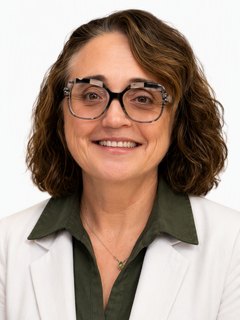
Katalin Susztak, MD, PhD
Willard and Rhoda Ware Professor of Diabetes and Metabolic Diseases, Professor of Medicine and Genetics, Perelman School of Medicine; Professor of Pediatrics, CHOP. Member of the National Academy of Medicine. Her laboratory studies the genetics, cell biology and artificial intelligence of kidney disease and runs the largest human kidney tissue biobank in the world.
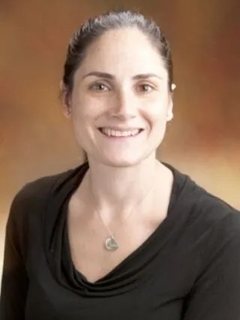
Michelle Denburg, MD, MSCE
Professor of Pediatrics and Epidemiology, Children's Hospital of Philadelphia and Perelman School of Medicine. Director of the Pediatric Center of Excellence in Nephrology. Her research addresses bone and mineral metabolism, glomerular disease and outcomes of chronic kidney disease in children.
Core directors

Jarcy Zee, PhD
Assistant Professor of Biostatistics, Penn and CHOP
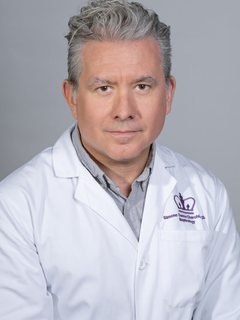
Simone Sanna-Cherchi, MD
Perelman School of Medicine and CHOP; physician-scientist in the genetics of congenital and glomerular kidney disease
Katalin Susztak, MD, PhD
Perelman School of Medicine
Michelle Denburg, MD, MSCE and Susan Furth, MD, PhD
Children's Hospital of Philadelphia
Internal Advisory Board
The Internal Advisory Board brings together institutional leaders from the Perelman School of Medicine and the Children's Hospital of Philadelphia. It meets with the Co-Directors once a year to review the Center's programs, cores and training activities and to advise on strategy and institutional support.

Susan Furth, MD, PhD
Children's Hospital of Philadelphia

Mitchell A. Lazar, MD, PhD
Perelman School of Medicine; Director, Institute for Diabetes, Obesity and Metabolism

Charles S. Abrams, MD
Perelman School of Medicine
Edward E. Morrisey, PhD
Perelman School of Medicine; Director, Penn Institute for Regenerative Medicine

Joseph W. St. Geme III, MD
Children's Hospital of Philadelphia; Physician-in-Chief and Chair of Pediatrics
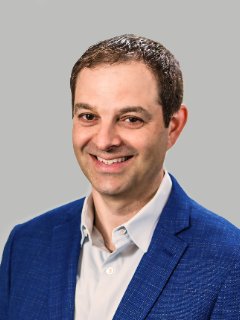
Benjamin L. Laskin, MD, MS
Children's Hospital of Philadelphia, Division of Nephrology
Project coordinators
- Hannah McLeah, Project Coordinator, CHOP
- Matthew Choi, Project Coordinator, Penn
The kidney at Penn and CHOP
The Center is the meeting place of a much larger kidney community. These are the clinics, institutes, cores and consortia that its members belong to.
Penn Medicine clinical programs
Penn Kidney Medicine
Glomerular Diseases, Lupus Nephritis, Amyloidosis and Paraproteinemia clinics; Comprehensive Hypertension Center; Cardiorenal and Ultrafiltration Program; Kidney Stone Clinic; PKD Clinic (PKD Foundation Center of Excellence); dialysis and home dialysis; kidney palliative care.
Penn Transplant Institute
Kidney and pancreas transplantation and the Living Kidney Donor Program.
Abramson Cancer Center, kidney cancer
Multidisciplinary care and trials for renal cell carcinoma.
Penn research institutes and cores
Penn Medicine BioBank
Genotypes, exomes and health records of more than 300,000 participants.
CRIC Scientific and Data Coordinating Center
Penn houses the coordinating center of the NIDDK Chronic Renal Insufficiency Cohort.
Children's Hospital of Philadelphia
Pediatric Center of Excellence in Nephrology
The NIDDK P50 center for pediatric nephrology clinical trials.
Pediatric Kidney Stone Center and Frontier Program
One of the largest pediatric stone centers in the country; PKIDS and the PONY center.
Inherited Kidney Diseases Program
PKD Foundation Pediatric Center of Excellence for genetic kidney disease.
Pediatric Kidney Transplant and Dialysis Program
Transplantation and all dialysis modalities for children.
Glomerular Disease Clinic and LINC
Glomerular disease and the Lupus Integrated Nephritis Clinic.
PEDSnet and Clinical Futures
The pediatric learning health system and CHOP's clinical effectiveness center.
Consortia and training
CKiD
Chronic Kidney Disease in Children; CHOP is a clinical coordinating center.
NEPTUNE and CureGN
The NIDDK glomerular disease networks, with Penn and CHOP as participating centers.
PERFORM-KUH
The Philadelphia mentored research training program in kidney, urologic and hematologic diseases.
PennKDSAP
The student-run kidney disease screening and awareness program.
Collaborate with us
The Center exists to make collaboration easy. Every program pairs a Penn and a CHOP perspective, every core serves both campuses, and the workshop series is where new projects are born. Here is how to work with us.
Penn and CHOP investigators
Join a research program, present at a workshop, request tissue or data from the Biobanking and Data Core, or ask the Biostatistics Core for help with a design or an analysis. Faculty, fellows and students from any department are welcome; membership is free and begins with an e-mail.
Academic collaborators elsewhere
Center investigators collaborate across the country and abroad through consortia such as TRIDENT, CRIC, NEPTUNE, CureGN and KPMP and through shared data sets. Proposals for joint studies, sample exchange under a material transfer agreement, or access to the kidney tissue biobank and its data are welcome.
Industry partners
Pharmaceutical, biotechnology and technology companies work with the Center on biomarker discovery, target validation, digital pathology and artificial intelligence, and clinical trials in adults and children. Agreements are handled through the Penn Center for Innovation and the CHOP Office of Technology Transfer.
Start a conversation: Katalin Susztak · Michelle Denburg, or write to a program lead or a core director.
Contact
Smilow Center for Translational Research, 3400 Civic Center Boulevard, Philadelphia, PA 19104
215-898-2009
Katalin Susztak: ksusztak@pennmedicine.upenn.edu · Michelle Denburg: denburgm@chop.edu