

Four shared cores give every investigator at Penn and CHOP access to expertise that no single laboratory can hold: statistics, genetics, human kidney tissue and data, and pediatric clinical trials. Fellows and junior investigators are the first priority of all four.
Biostatistics · Kidney Genetics · Biobanking and Data · Pediatric Clinical Trials (PCEN)
Biostatistics Core
Jarcy Zee, PhD (Director)
The Biostatistics Core within the Penn-CHOP Kidney Innovation Center provides leadership and expertise in study design, data management and statistical analysis for research in nephrology. Affiliated faculty and research staff biostatisticians collaborate with KIC investigators to solve real-world problems in nephrology, develop grant proposals for new research studies, develop and apply rigorous statistical methods, and train the next generation of nephrology researchers.
Core faculty and staff have expertise in a wide range of statistical methods, including causal inference, clinical trial design, longitudinal and survival data analysis, latent class analysis, geospatial analysis, statistical genetics and multi-omics, and machine learning. Core biostatisticians have worked with many clinical trial, observational, electronic health record and administrative kidney datasets, including ARIC, CIRCE, CKDopps, CRIC, CureGN, DOPPS/PDOPPS, Medicare, NEPTUNE, PEDSnet, PHIS, TriNetX and UNOS. The team also has substantial experience leading and supporting data coordinating centers.
Research teams who would like to collaborate with Core faculty or staff should complete the intake form to schedule an initial meeting. Limited Core funding is available to support projects led by Penn and CHOP nephrology fellows and other junior trainees and investigators without their own funding. Other investigators are expected to fund the effort of the biostatisticians during the project.
Request a consultation (intake form)
Leaders
- Jarcy Zee, PhD, Director, Assistant Professor of Biostatistics
Affiliated faculty biostatisticians
- Dawei Xie, PhD, Associate Professor of Biostatistics
- Jesse Hsu, PhD, Associate Professor of Biostatistics
- Hongzhe Li, PhD, Professor of Biostatistics
- Mingyao Li, PhD, Professor of Biostatistics
- Douglas Schaubel, PhD, Professor of Biostatistics
- Nicholas Seewald, PhD, Assistant Professor of Biostatistics
- Rui Xiao, PhD, Professor of Biostatistics
- Wei (Peter) Yang, PhD, Professor of Biostatistics
- Jiayin Zheng, PhD, Assistant Professor of Biostatistics
Affiliated staff biostatisticians
- Tran Bourgeois, MPH, CHOP Biostatistician II
- Shannon Chen, MS, Penn Biostatistician
- Sijia Huang, MS, Penn Biostatistician
- Yun Li, PhD, Penn Bioinformatician
- Qian (Jane) Liu, MPH, CHOP Biostatistician III
- Melanie Loth, MS, Penn Statistical Analyst B
- Yue Ren, MS, Penn Statistical Analyst B
- Daohang Sha, PhD, Penn Biostatistician
- Nianfu Song, PhD, Penn Biostatistician
- Joanna Walsh, MS, Penn Statistical Analyst B
- Xiaoming Zhang, MS, Penn Biostatistician
Kidney Genetics Core
Simone Sanna-Cherchi, MD (Director)
Simone Sanna-Cherchi is a nephrologist and human geneticist who joined Penn and CHOP from Columbia University, where he led one of the largest genetic studies of congenital anomalies of the kidney and urinary tract and of childhood nephrotic syndrome. His work mapped rare copy-number variants and coding mutations that explain disease in families, discovered new genes for kidney malformation and for focal segmental glomerulosclerosis, and showed how common variants modify the risk and course of these conditions. He received the 2025 Distinguished Researcher Award of the American Society of Nephrology.
The Kidney Genetics Core brings this expertise to every investigator and clinician at Penn and CHOP. The Core helps design genetic studies, arranges exome and genome sequencing through the institutional sequencing centers, interprets variants and returns results to the treating team, runs genome-wide association and rare-variant analyses together with the Biostatistics Core, and advises on the recruitment and consent of families for genomic research. It connects the Penn Medicine BioBank, the human kidney tissue biobank and the pediatric cohorts of CHOP into one genetic resource for the Center.
Investigators should contact the Core to arrange an initial consultation. Fellows and junior investigators are encouraged to bring unsolved families and cohorts; the Core treats them as a priority.
Draft text, to be reviewed by Dr. Sanna-Cherchi.
Biobanking and Data Core
Katalin Susztak, MD, PhD (Director)
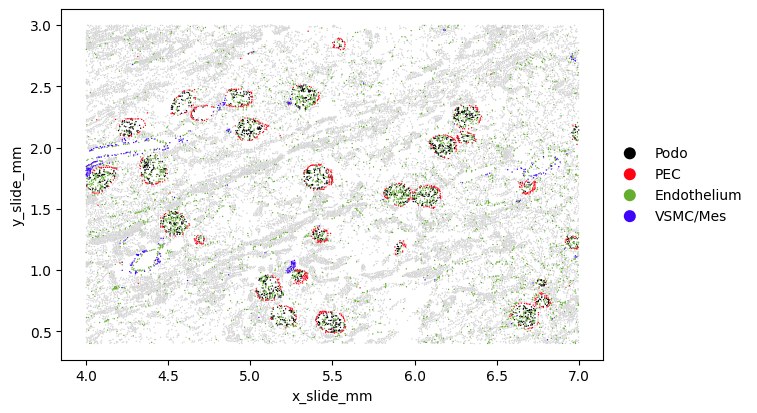
The Susztak Laboratory has collected more than 5,000 human kidney samples with clinical information and profiled them at every molecular layer: genotype, bulk and single-cell transcriptome, chromatin accessibility, DNA methylation, spatial transcriptomics and digital pathology. The biobank is the largest of its kind, and the Core makes it available to Penn and CHOP investigators.
The Core offers access to tissue and nucleic acids for approved projects, to the thirty open data resources of the Susztak Lab Kidney Biobank (kidney eQTL, caQTL, methylation and GWAS atlases, single-cell and spatial maps of the human kidney and of rodent models), and to the laboratory's artificial intelligence tools, NephroBase and NephroLens, for cell, slide and patient-level analysis. The Core also hosts the Computational Biology Club in Kidney Research on the twelfth floor of the Smilow Center.
Pediatric Clinical Trials Core (PCEN)
Michelle Denburg, MD, MSCE and Susan Furth, MD, PhD (Directors)
The Pediatric Center of Excellence in Nephrology (PCEN) was established at the Children's Hospital of Philadelphia with NIDDK funding to promote and develop clinical trial research in pediatric nephrology. As a core of the Kidney Innovation Center it serves investigators at both institutions who want to design, fund and run trials and observational studies in children with kidney disease.
The Core helps with trial design and feasibility, regulatory and data-coordinating support, access to the CKiD, CureGN, NEPTUNE and PEDSnet pediatric cohorts and to the PHIS and TriNetX administrative datasets, and with the causal-inference and pragmatic-trial methods its investigators have developed, for example for comparing balanced fluids with normal saline in children with sepsis. The PCEN Summer Scholars Program trains undergraduate, post-graduate and medical students in pediatric nephrology research.